Back in 2023 I shared my first images of the cosmos , and the very first of those was the Andromeda Galaxy, taken on a November night in 2022. I was stunned with the result.
This summer I pointed the telescope at the same galaxy again. The equipment is the same, the galaxy certainly hasn’t changed, and yet the image is in a different league.
Same galaxy, four years apart
Drag the handle left and right. The left side is my 2022 attempt, the right side is today.
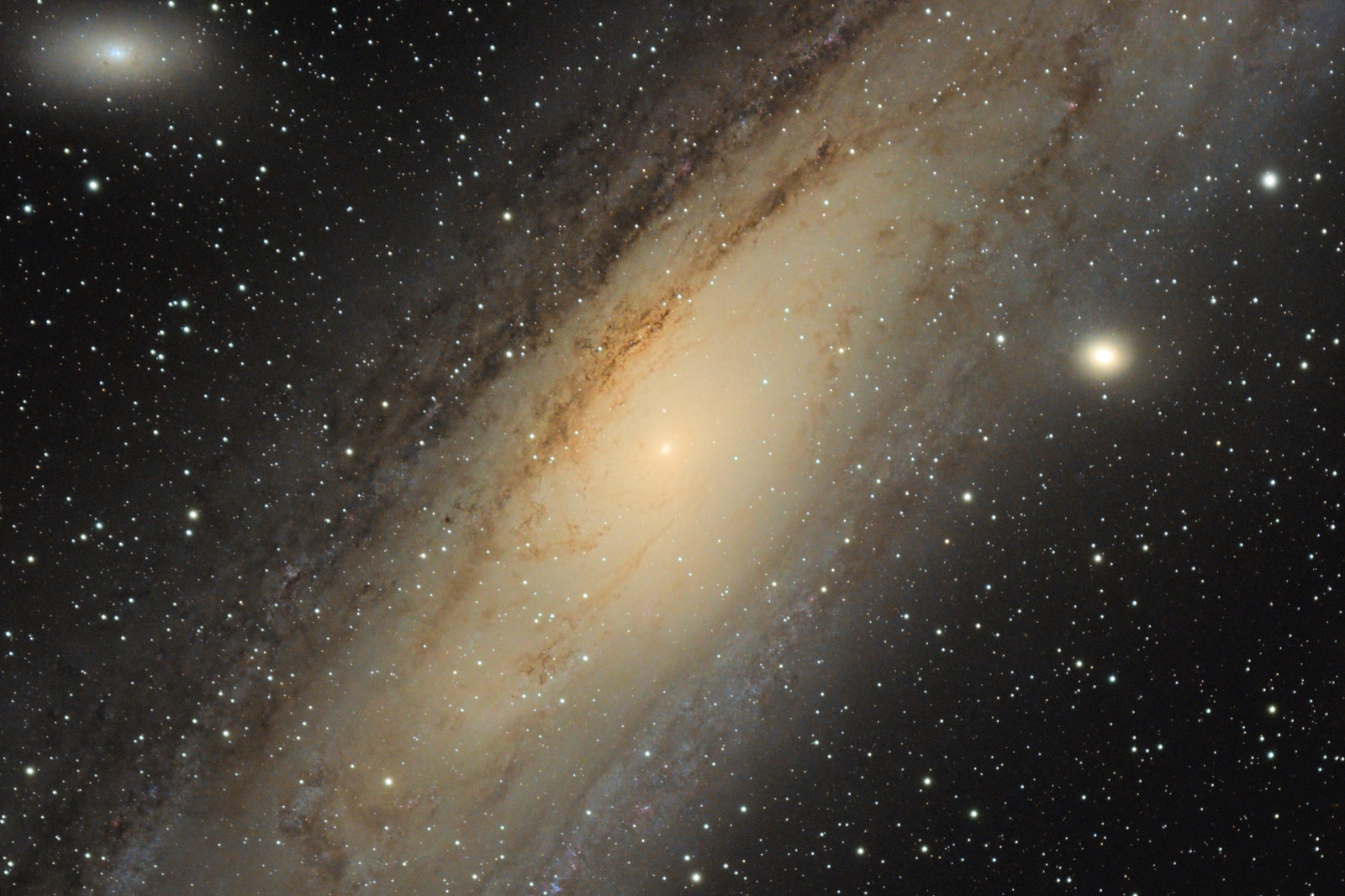 2022
2026
2022
2026
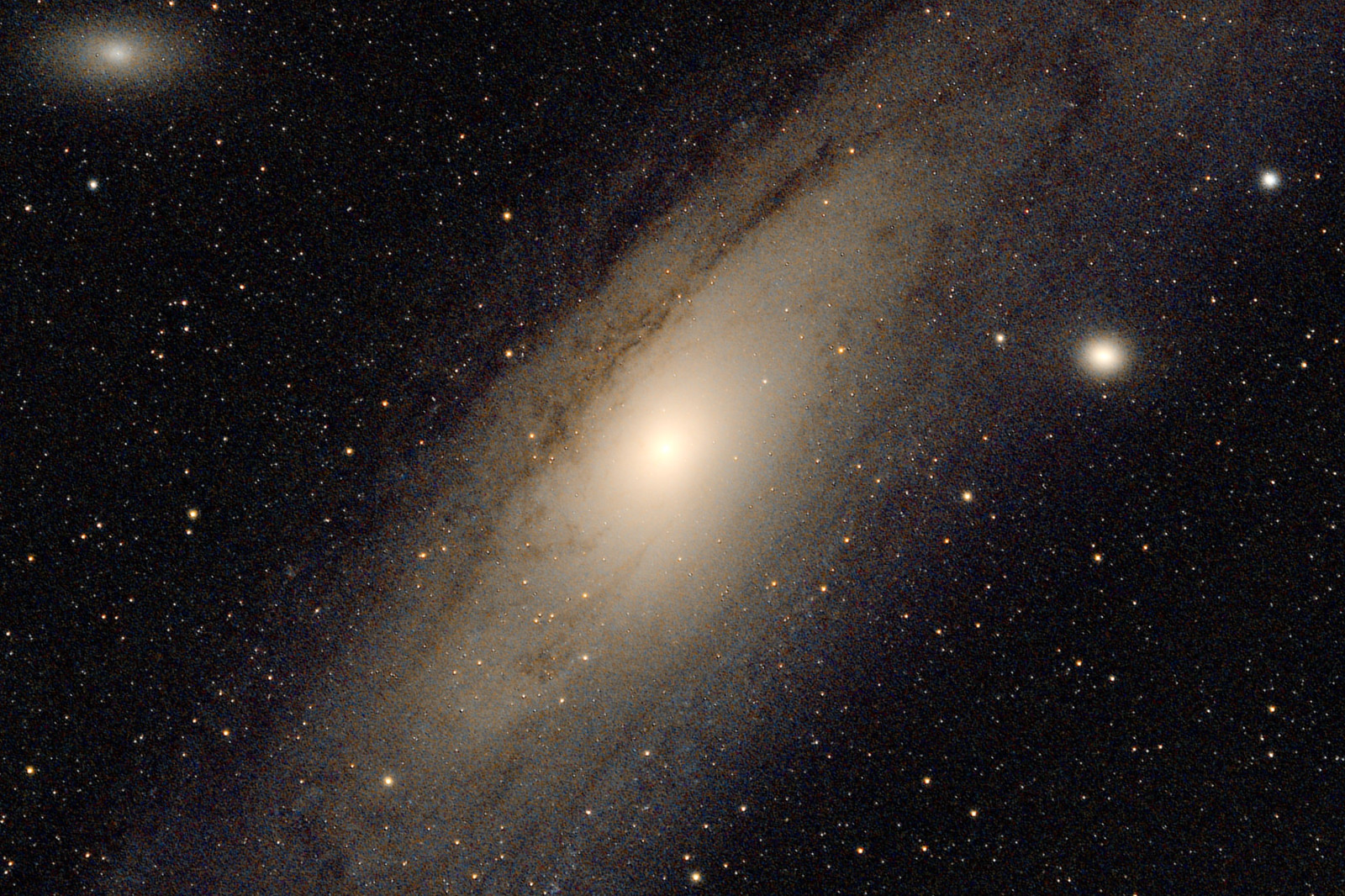
The first thing I notice is the dust lanes. In 2022 they’re a dark smudge, now you can follow each one as it winds around the core. Then there’s the blue in the outer arms, which is where the young stars are, and the grain of the old image giving way to a smooth, clean sky.
So what changed?
It’s not the equipment
It would be easy to assume the new image is down to a pile of expensive new kit, but it isn’t. The telescope, mount and camera are the same ones I wrote about in my beginners guide to the equipment . The camera is still the same Canon 600D.
The difference is four years of learning how to use it all properly, and a deeper understanding of each step.
More hours on the target
The 2022 image is made from about 1 hour of exposure, eighteen photos of 200 seconds each. The new one benefits from 4.4 hours, i.e. eighty images collected over two nights in August.
More hours means less noise and more faint detail, but it’s a game of diminishing returns. To halve the noise you need four times the hours, and each hour is time spent at 2am checking that nothing has gone wrong. Although my dog seems to love the opportunity to be outside in the early hours, I can’t say the same.
I actually took 99 photos this time and threw the worst 19 away, which is something I’d never have had the discipline to do in 2022.
A steadier setup
Before taking a single photo, the mount has to be lined up with the Earth’s axis, which is called polar alignment. When it’s right, the mount can follow the sky smoothly and the stars stay as sharp points across each 200 second exposure. When it’s off, the guiding has to work much harder, constantly correcting to keep the target in place, and the stars come out softer.
I use the same method as I did in 2022, the three point polar alignment in NINA, which measures how far out you are and tells you which way to nudge the mount. The difference is probably patience, back then I accepted a bigger error because I was itching to get started. This time I kept adjusting until the error was small and only then began.
Picking my nights
I used to image whenever the sky was clear, which seemed like a reasonable starting point… turns out there’s more to it.
The 2022 image was taken with the moon about three-quarters full, which pollutes the image with unwanted light. This time I waited for the week before a new moon, when there was only a thin crescent to contend with. I also waited until Andromeda is high in the sky, because the lower it is, the more of our atmosphere its light has to struggle through on the way to the camera.
Dusk and dawn was another improvement point, both linger for much longer than your eyes suggest, and a camera collecting light for 200 seconds picks up that faint glow long before you do. In a UK summer that leaves a window of only a few hours, so now I plan each session around it.
Not everything went my way. The recent image’s efforts fell in the middle of the UK heatwave, and my camera has no cooling, so the sensor sat close to 20 degrees celcius. A warm sensor is a noisy sensor, yet the new image is still far cleaner than the one taken on a cool November night.
Processing the data
This is where I’ve improved the most. Whilst the tools are free and anyone can download them, what’s changed is that I now understand what each one is for, what order to use them in, and when to stop.
This time I measured what was in the data rather than judging it by eye, and the biggest surprise was how little of it was galaxy. Around 91% of the light in my image of Andromeda’s disc was actually streetlight, moonlight, or other light pollution. The galaxy was the thin slice on top.
So the processing is mostly a careful job of removing everything that isn’t the galaxy:
- The eighty photos are calibrated and stacked into one image in Siril.
- GraXpert removes the uneven glow of light pollution, and the colours are calibrated against star catalogue data.
- Cosmic Clarity sharpens and denoises the result.
- The stars and the galaxy are split into separate layers with StarNet, so the galaxy can be brightened without bloating the stars.
- The galaxy is brightened while keeping its true colour ratios, which is what keeps the core golden, and then the stars are blended back on top.
The full frames
The slider above is cropped to the area both photos share. Here are the two images in full:
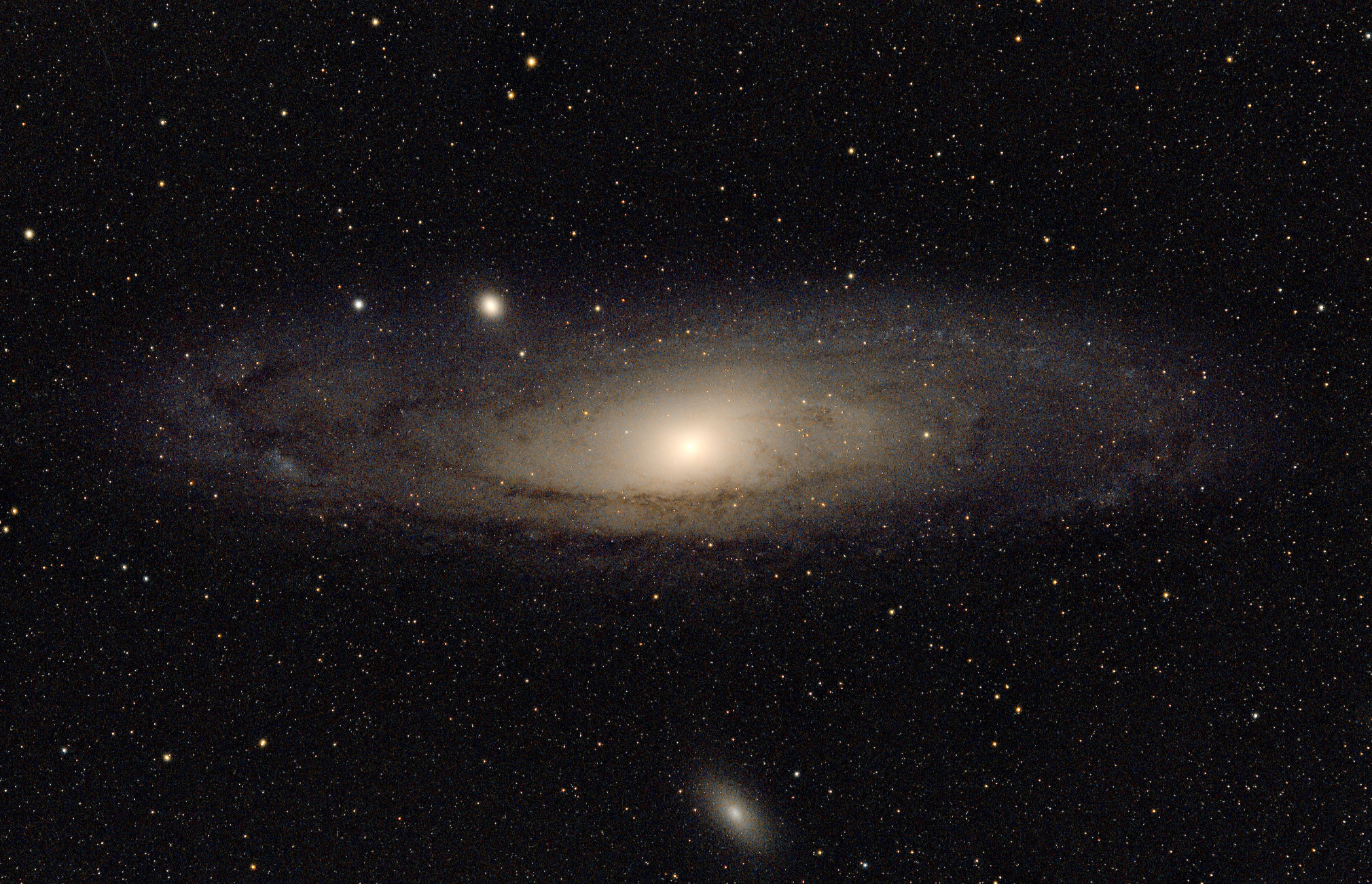 Andromeda Galaxy, 2022. 1 hour of exposure.
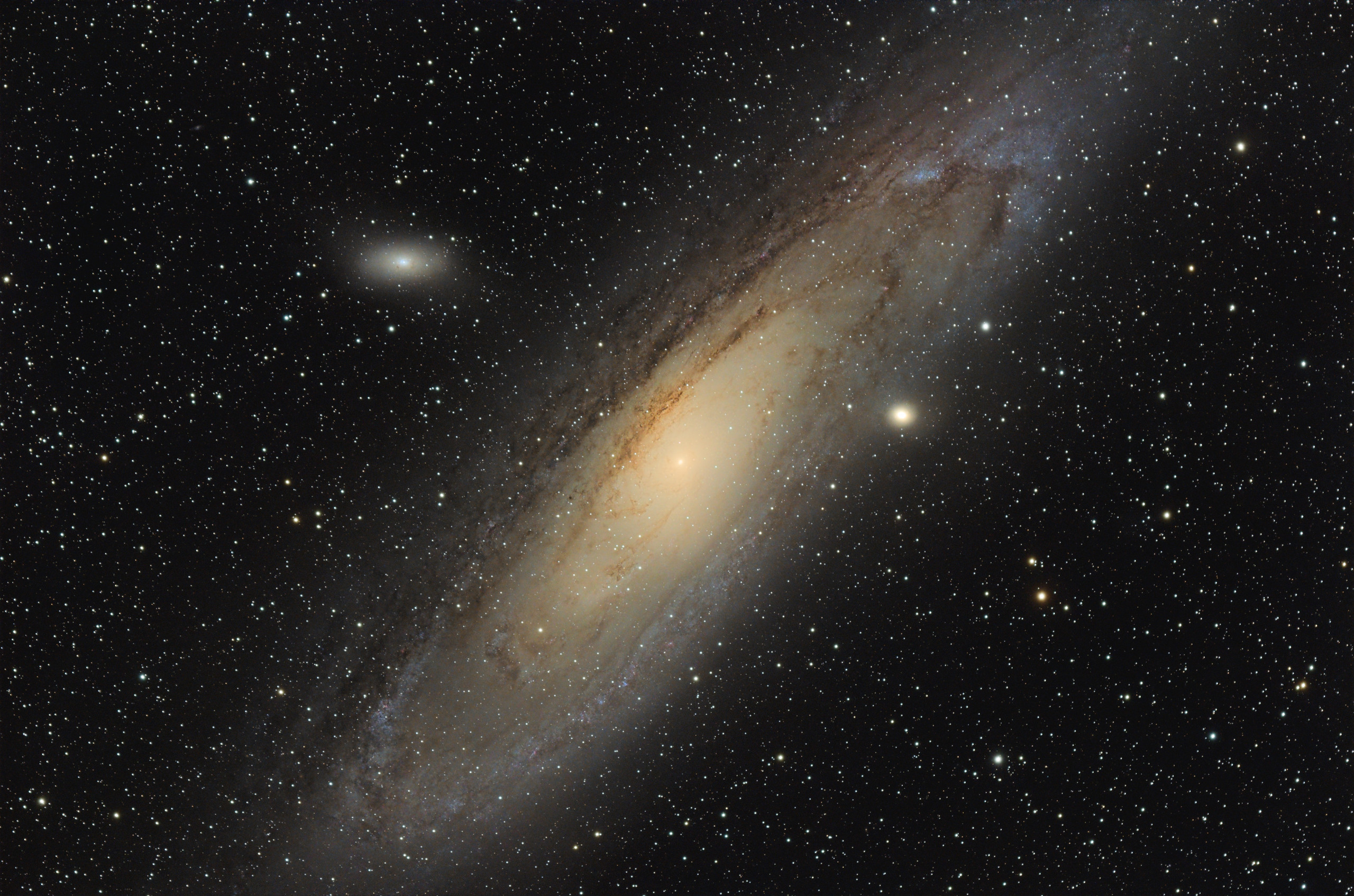 Andromeda Galaxy, 2026. 4.4 hours of exposure.
Bonus: Elephant’s Trunk Nebula
One more, just because it’s cool to look at.
This is the Elephant’s Trunk Nebula, a column of gas and dust around 2,400 light years away in the constellation of Cepheus. You’ll find the trunk itself in the lower left of the image, it’s the dark, curling column with the bright glowing rim.
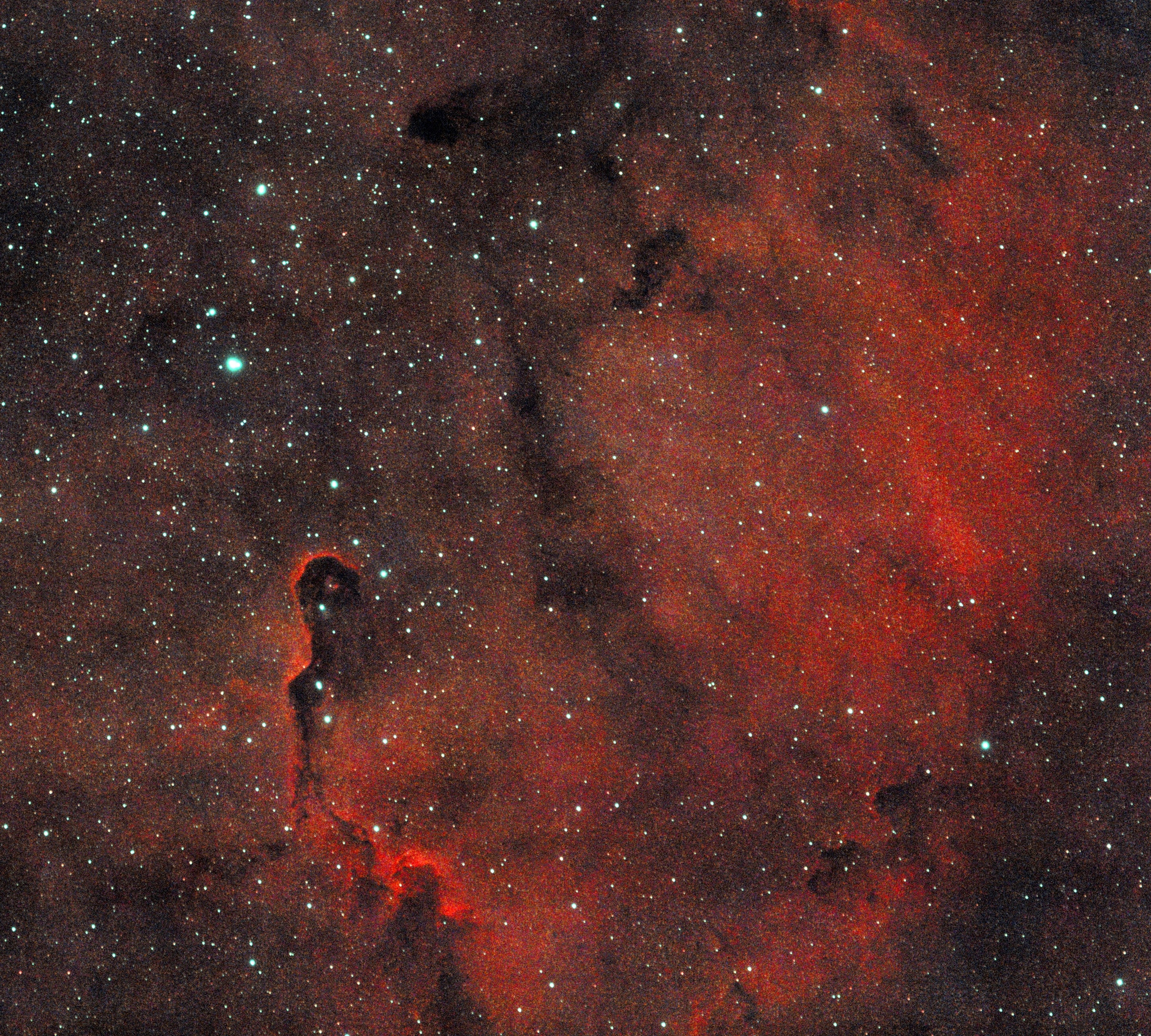 Elephant’s Trunk Nebula. Just under 5 hours of exposure over two nights in May 2026.
The biggest lesson from four years of this hobby is that the next upgrade is rarely the thing holding you back. Same telescope, same camera, same galaxy, and a much better picture.
That said, next up I want to take all of this somewhere properly dark. With 91% of my light coming from streetlights, a night under a dark sky should be worth several at home. And a new cooled camera wouldn’t hurt either!
Software
NINA, PHD2 for capturing.
Siril for stacking, calibration and colour calibration.
GraXpert for removing light pollution gradients, Cosmic Clarity for sharpening and denoising, StarNet for separating the stars.
A Python script of my own for the final stretch and colour.
Equipment
SkyWatcher 80ED DS-Pro & 0.85x flattener, HEQ5 Mount, 600D Astro-modified, ZWO ASI120mm mini (guiding), ZWO EAF, PPBA, and even more patience.